
How to Find Missing LEGO Pieces: Count by Part and Color
Turn a mixed pile into a precise missing-parts list. Count each shape and color separately, then check the quantities before ordering.
6 minute read · By BrickMissing
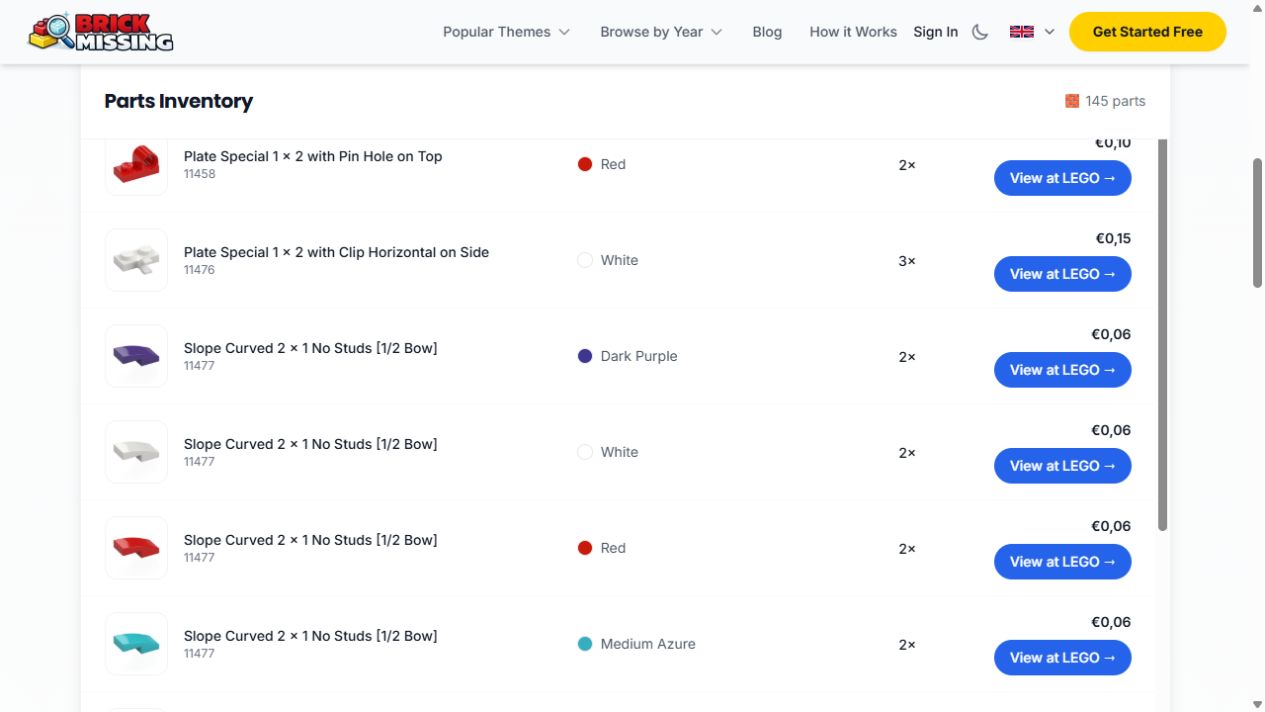
To find missing LEGO pieces, compare what you physically have with the required quantity for every exact part-and-color combination in the set. A total brick count cannot tell you which pieces are missing.
This guide uses Magical Unicorn (31140-1) as a worked example. We checked its public BrickMissing inventory on 5 October 2026: 76 distinct part-and-color rows add up to 145 required pieces. The example counts below are deliberately hypothetical; we have not inspected a physical copy of this set.
1. Start with the right set and a usable inventory
Use the set number rather than a remembered name: similar models can have different inventories. BrickMissing adds a catalog variant suffix, so the box number 31140 appears as 31140-1.
Open Parts Inventory and let the complete list load. If an inventory warning appears, resolve the missing reference data before treating the result as a complete shopping list. The printed box count is a useful cross-check, not a substitute for counting each row.
2. Sort by shape first, then by exact color
Put plates, bricks, curved slopes and connectors into separate trays. Within each tray, split the colors. Keep printed parts apart from plain parts that have the same outline.
Count loose pieces and pieces already attached to the model once each. Check the underside of assemblies for concealed plates. Set aside extra pieces until you know which inventory row they satisfy.
- Choose one inventory row and match its geometry, color and any decoration.
- Count the usable pieces in that row, including those still attached to assemblies.
- Record what you have before moving to the next row. An unchecked row is still unknown.
- Mark damaged pieces separately if they cannot serve the intended connection.
3. Calculate the deficit for each row
For a row, missing = max(required − counted usable, 0). Keep surplus pieces in a separate column: an extra red slope cannot cancel a missing white slope.
Here are three real inventory rows from 31140-1, all catalog part 11477. Only the “counted” column is invented to demonstrate the calculation. The result is three missing pieces across two colors, even though the shape is identical.
| Part / color | LEGO element | Required | Example counted | Missing |
|---|---|---|---|---|
| 11477 / Dark Purple | 6057390 | 2 | 1 | 1 |
| 11477 / White | 6034044 | 2 | 0 | 2 |
| 11477 / Red | 6029946 | 2 | 2 | 0 |
- Download the full 31140-1 counting sheet (CSV)
76 verified reference rows. Counted, missing and notes are blank for you to fill in. Spare pieces are outside this required-parts sheet.
4. Separate a physical count from collection coverage
A collection-based “missing” estimate answers a different question: how much of a target set your recorded collection could supply. It does not inspect the bag you are holding. A piece recorded in another set may also still be built into that set.
Use the public Qty column or the downloaded sheet for checking one secondhand copy. Use your collection estimate when planning to reuse parts, then physically confirm those parts are available before ordering the remainder.
5. Identify the exact replacement before shopping
Record the catalog part number, color, decoration and missing quantity. If a confirmed LEGO element ID is available, record it too. Different catalogs can use different identifiers; the number alone does not excuse a color or print mismatch.
Review the seller’s pictured part and selected color before buying. A shop search result is a candidate, not proof that it matches. Prices and stock can change, and delivery or minimum-order charges may outweigh the price of a small piece.
6. Choose the right replacement route
If a piece was absent when you opened a new set, use LEGO’s missing-pieces service and describe the set and piece accurately. If a whole bag or many pieces are missing, contact LEGO customer service.
For pieces lost later or absent from a used purchase, start with the buying route: LEGO Pick a Brick or a secondary-market seller. Check the exact item and total delivered cost. Requesting a missing-from-new replacement is a different process from buying lost pieces.
Finish with a list of exact part-and-color deficits, not a percentage estimate. Recount the uncertain rows before placing an order. A short, verified list is more useful than a long list built on assumptions.